
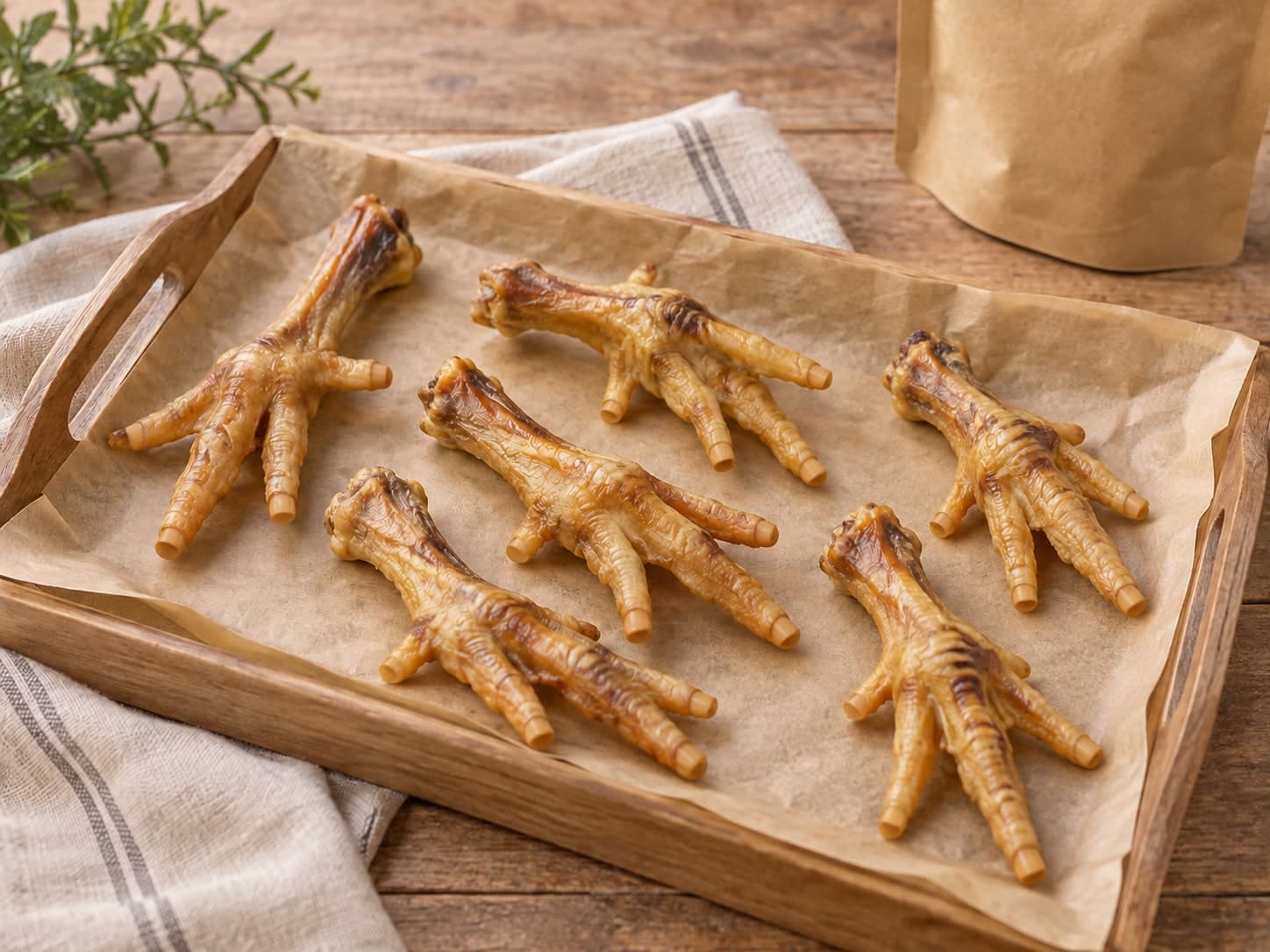
Dehydrated Chicken Feet Dog Chews
A byproduct-friendly, single-ingredient chew: naturally rich in glucosamine, chondroitin, and collagen for joint support.
- Prep
- 15 min
- Cook
- 24-48 hours dehydrating
- Serves
- Yield varies by batch size
Ingredients
- As many raw chicken feet as your dehydrator or oven racks can hold in a single layer
- Optional: a light dusting of turmeric or ginger powder for extra flavor (skip for the simplest version)
Instructions
- Rinse the feet thoroughly under cold water to remove any dirt or debris.
- Using kitchen scissors, snip off the toenails on each foot — they harden considerably during drying and could be sharp or a choking risk.
- If desired, pat the feet dry and lightly dust with turmeric or ginger powder for added flavor and anti-inflammatory benefits — this step is optional.
- Arrange the feet in a single layer on dehydrator trays (or a wire rack over a baking sheet if using an oven), making sure pieces aren't touching or overlapping.
- Dehydrator method: set to 150-170°F and run for 24-48 hours, checking periodically. Oven method: set to the lowest setting (ideally 170°F or below) with the door slightly propped, and check every few hours.
- The feet are done when they are completely hard and dry all the way through — no flexibility, no moisture in the padded areas or skin. Any softness means they need more time.
- Let the finished chews cool completely to room temperature before handling or storing — they'll continue to firm up as they cool.
- Store in an airtight container or bag. No refrigeration needed if fully dried; they keep well for weeks at room temperature.
Tips
- Fully dehydrated bones become brittle and crush rather than splinter, which is what makes this safer than raw or cooked bones that can shatter into sharp shards.
- Drying time depends heavily on humidity and your equipment — don't rush it. Pull pieces individually as they finish rather than waiting for the whole batch to hit one exact time.
- This is a great way to use feet you're not putting toward broth — nothing wasted, and it turns a byproduct into a sellable or giftable item if you're distributing farm products directly to customers.